What We Heard at the UNDSCVRD Small Biz Summit
Small business owners and community members shared what they need to grow, how they are using AI, and what they envision for the future of Kapwa Gardens.
Recap of the UNDSCVRD Small Business Summit on 9/29/26. Video by Manalo Pictures
Thank you to everyone who joined us for the UNDSCVRD Small Biz Summit on September 29.
Following the main presentation, guests rotated through three focus-group stations exploring economic development, artificial intelligence, and the Kapwa 2.0 concept. The conversations gave us a clearer picture of what our community values, where local entrepreneurs need support, and what Kultivate Labs should consider as we plan for the future.
Here’s what we heard.
Build a denser, more welcoming economic corridor
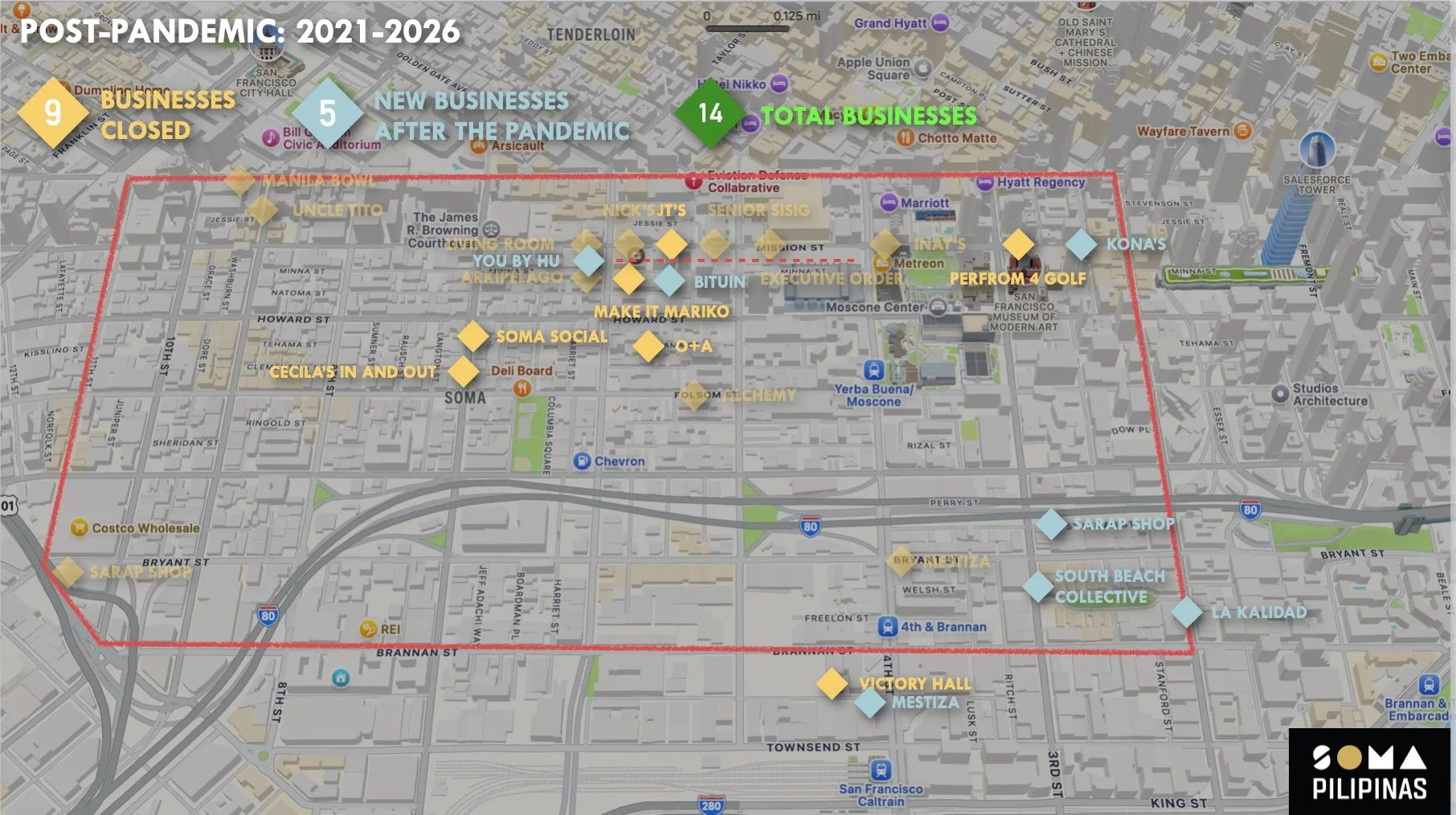
The spread of business across the district over time
At the Economic Development station, we asked whether events can effectively support local economic growth—and what keeps small businesses from expanding in San Francisco.
Participants told us that the corridor currently feels spread out and difficult to navigate, particularly for visitors unfamiliar with the neighborhood. Parking remains a challenge, and many business owners live outside the city.
Rather than expanding across a wider area, attendees encouraged us to begin with a smaller footprint and create greater density within it. Everyday destinations and a strong anchor business could help generate consistent foot traffic while attracting more small businesses to the district.
Events still have an important role to play. They build community, introduce patrons to local businesses, and create meaningful cultural connections. But participants emphasized that events work best when paired with permanent spaces and a broader, long-term economic strategy.
Tell our story—and help businesses tell theirs
Another message came through clearly: people want to better understand what Kultivate Labs does, why the work matters, and where the organization is headed.
Attendees suggested more visible banners and signage, stronger information for patrons, and additional cultural district merchandise. They also want greater visibility into Kultivate Labs’ future vision and plans.
That storytelling need extends to the entrepreneurs we support. Vendors are working in a crowded marketplace and often need help communicating what makes their products, services, and stories distinct. Stronger storytelling tools could help them connect with customers and build lasting recognition.
Grow and diversify the audience
Participants want to see more Filipino residents and visitors return to the district. The conversation also surfaced an important question: Does the area need more residents, more patrons, or both?
The group encouraged Kultivate Labs to build bridges with other cultures and communities through food, music, entertainment, and art. Attendees also expressed interest in a wider range of experiences beyond food and retail.
Ideas included a community-operated retail space, a sister-city relationship, partnerships with more businesses and organizations, and collaborations with Filipino creators who could produce user-generated content and help introduce the district to new audiences.
Give entrepreneurs the support to take their next step
Many small business owners have ideas and momentum but lack the startup capital, resources, or guidance needed to grow.
Participants asked for help identifying funding and business-development resources. They also highlighted the importance of entrepreneurship education for younger generations.
The pandemic interrupted years of community and business momentum, and many entrepreneurs are still rebuilding. Permanent space, stronger partnerships, practical education, and easier access to resources could help local businesses move from participating in events to building something sustainable.
The community is ready to move beyond AI basics
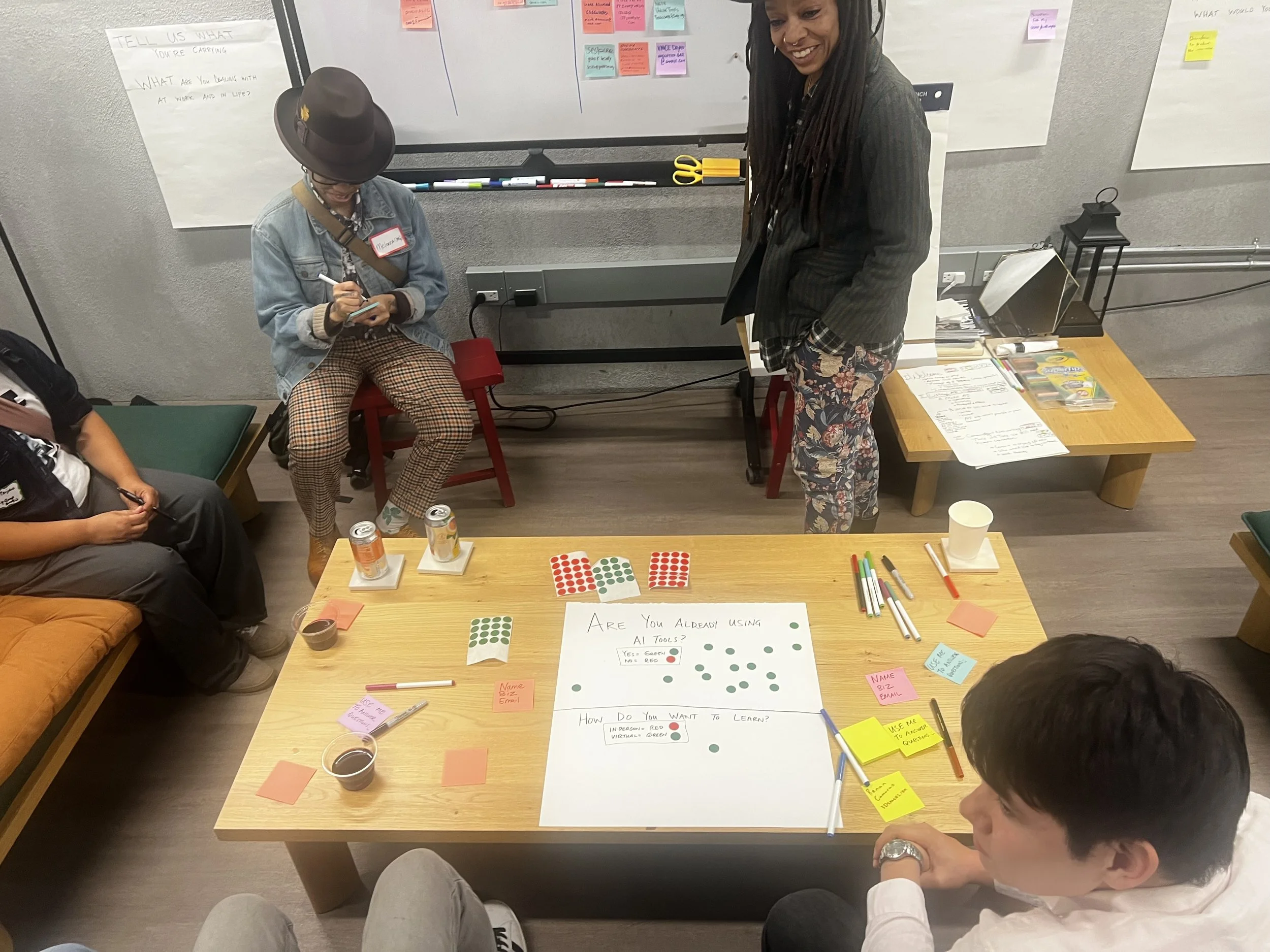
At the Eksplora station, we asked small business owners where they are in their AI journey. Guests identified their strongest area—Visibility, Operations, or Products and Offers—and shared what they most want to learn.
The results showed that this community is not starting from zero:
About 85% of the votes indicated that participants already use AI tools.
Products and Offers was the strongest area, receiving 16 notes.
Visibility received six notes, while Operations received three.
Eight of the 11 learning requests focused on Operations.
Interest in virtual and in-person learning was nearly even, with approximately six votes for virtual and five for in person.
Participants were especially interested in using AI for people management, cash flow, scaling, business structure, automation, and high-level business dashboards.
Five lessons emerged from the conversation:
Begin with application, not introduction. Most participants are already experimenting with AI and are ready for practical use cases.
Make Operations a priority. It was both the weakest area of current confidence and the strongest area of interest.
Organize learning around shared needs. Visibility, Operations, and Products and Offers gave a diverse group of entrepreneurs a useful common framework.
Keep human judgment at the center. Participants want help deciding what AI should handle—and what should remain human.
Design for flexibility. The close split between virtual and in-person preferences suggests that multiple formats are worth testing.
The results also revealed an opportunity for peer learning. The room was strong in creating products and offers but less confident in the behind-the-scenes work of running a business. Shared templates and reusable AI workflows could turn one entrepreneur’s solution into another’s starting point—while keeping owners in control of their decisions, their voice, and what reaches their customers.
Make Kapwa Gardens feel Filipino every day
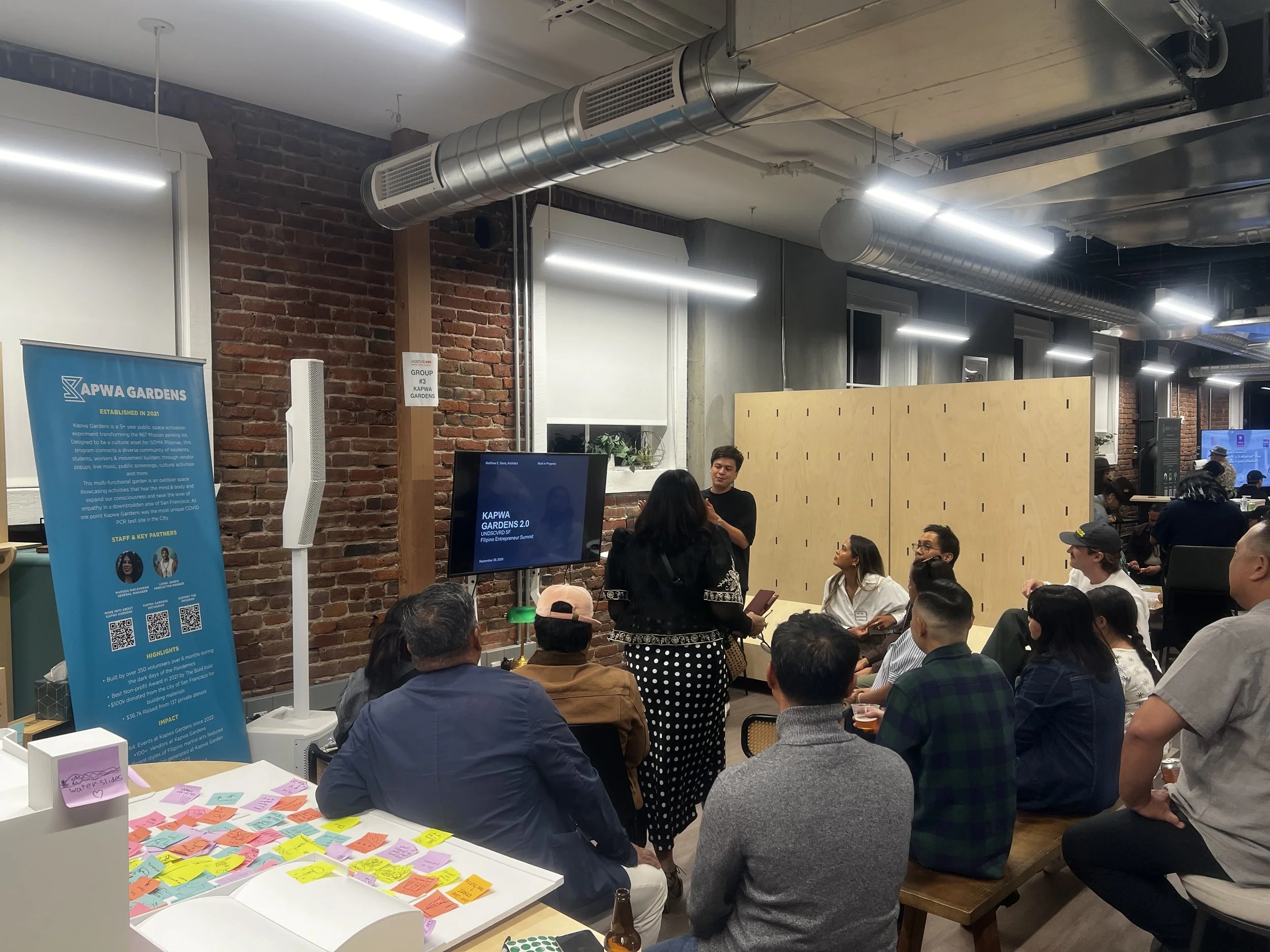
The Kapwa Gardens 2.0 station invited participants to respond to the next vision for Kapwa Gardens.
One of the strongest recommendations was to make the garden’s Filipino identity visible even when no event is taking place. Participants suggested complementing the playground with a stronger food focus and creating a space that feels culturally rooted throughout the day.
They also saw activity as part of the safety strategy. Programming at different times of day could keep the space lively and welcoming. For children, attendees imagined an exercise-focused, multisport area that could evolve as the day progresses.
At the same time, participants felt the current concept includes too many competing ideas. Fewer, more intentional programs could give Kapwa 2.0 a clearer identity and make the space easier to operate successfully.
Imagine a micro city within the city
Participants described Kapwa Gardens as more than an event venue. It could become a place for everyday gathering—a “micro city within a city” where people can eat, play, connect, and experience Filipino culture.
A sister-city relationship could create opportunities for reciprocal programming with other cultural spaces. Design ideas included personalized bricks or tiles in Kapwa Square recognizing donors, stalls near the existing benches, a more sculptural entrance, and dedicated space for food trucks and vendors. One participant also offered Filipino modernist artist Arturo Luz as a possible visual reference.
Together, these ideas point toward a space that is culturally distinctive, flexible, and welcoming even on an ordinary day.
What comes next
Across all three stations, participants identified several areas where they want practical support:
Finding business leads
AI automation
Human resources consulting
Contracts
Collaboration opportunities
The focus groups reinforced something we have seen throughout our work: this community has no shortage of ideas, talent, or ambition. The challenge is building the infrastructure, connections, visibility, and resources that allow those strengths to compound.
Your feedback will help Kultivate Labs refine its programs, partnerships, and physical spaces. Thank you to everyone who shared their experience and imagination with us. We’re excited to keep building the next chapter together.